One of the unexpected pleasures of doing an art show has very little to do with selling art.
At the Bethesda Row Arts Festival this weekend, my neighbor was wood sculptor Jonathan Glowacki of Glowacki Studios. For two days, we sat beside one another, watched thousands of people walk past our booths, compared notes about shows and resources, traded stories from the road and somehow even got around to recommending audiobooks.
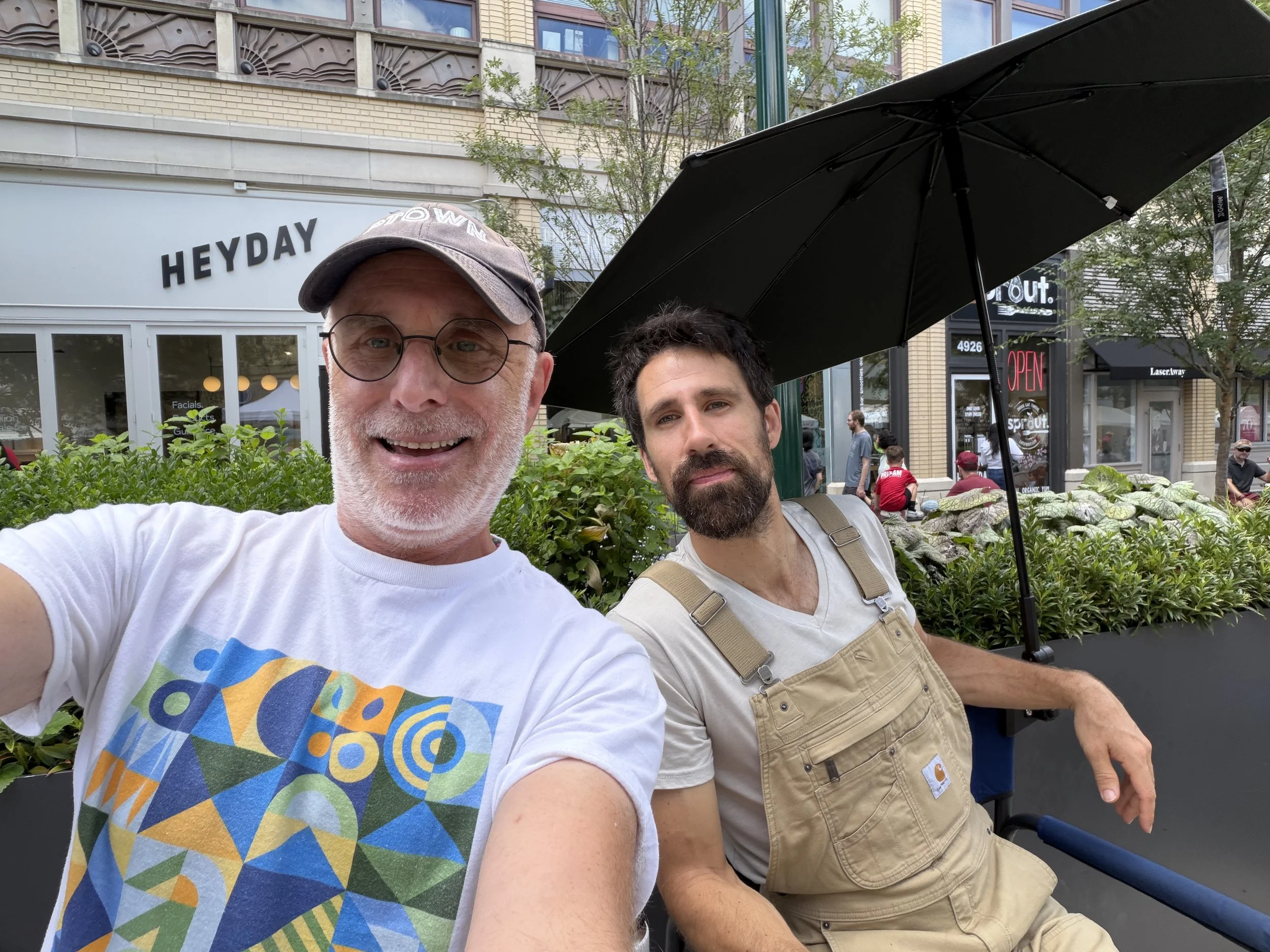
But what struck me almost immediately was how naturally Jonathan’s work and mine seemed to live beside one another.
Our materials couldn’t be more different. Jonathan works with hardwood, using angle grinders and rotary tools to carve deeply textured abstract reliefs. I work in encaustic, building compositions from paper, pigment and wax and then working into the surface with a heated stylus.
And yet we seem to be exploring some of the same territory.
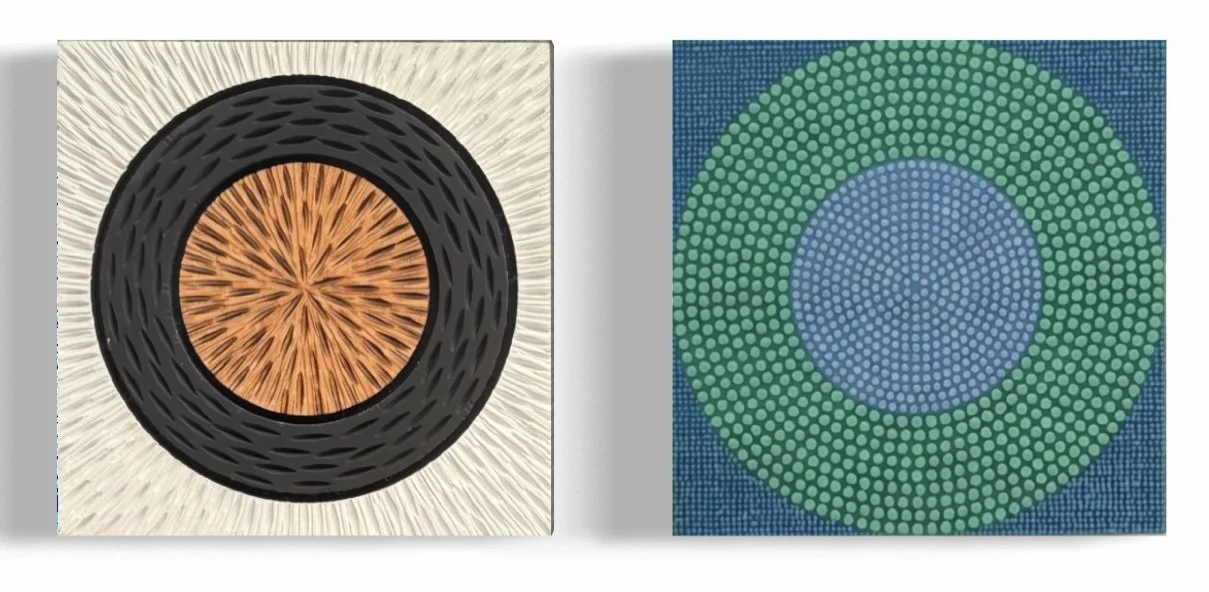
Shape. Repetition. Geometry. Pattern. Texture.
In both bodies of work, relatively simple geometric forms are repeated, shifted and recombined until they become something much more complex. And in both, the geometry is only part of the story. The hand of the artist and the physical qualities of the material disrupt that precision and give the work its surface and character.
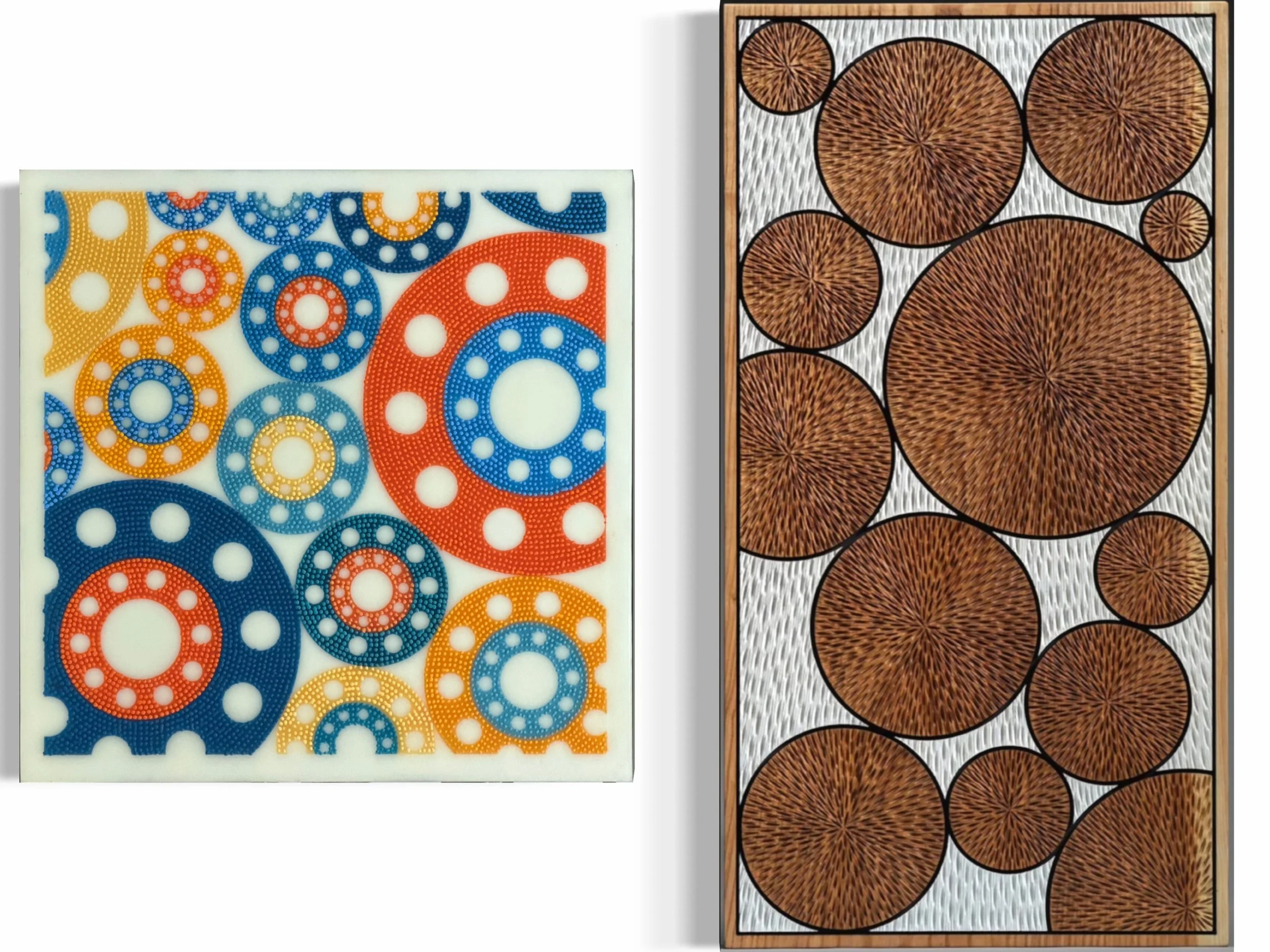
Jonathan describes his work as “a language of patterns.” I love that phrase because it describes something I recognize in my own practice as well.
Standing back, you see the composition. Move closer and you begin to see how it was made.
Maybe that’s why our two booths felt so comfortable beside one another. It was almost as though we were participating in a little two-person exhibition neither of us had planned: two artists exploring a related visual language through completely different materials.
And that may have been my favorite part of Bethesda.
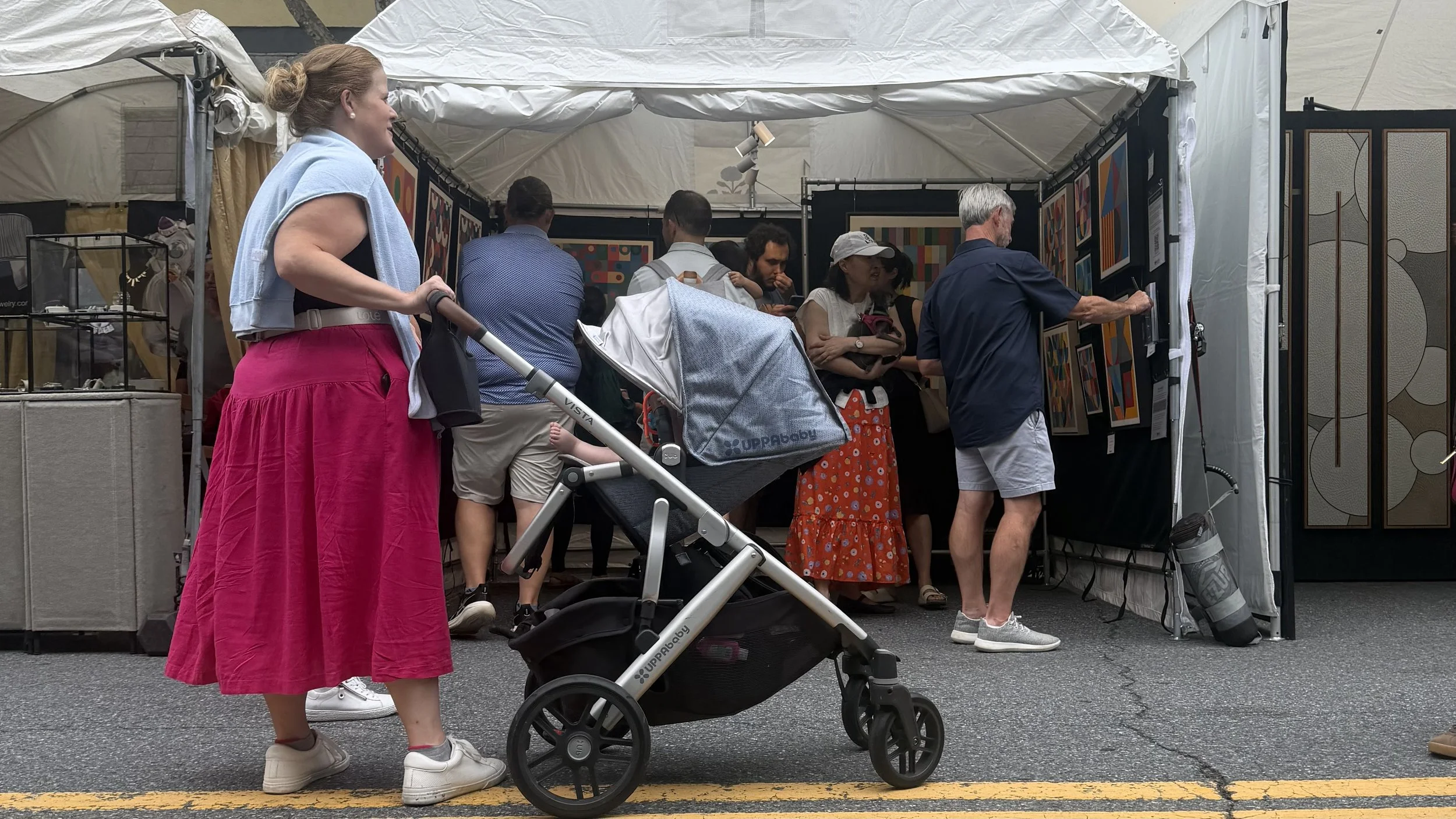
Art fairs can be long days. There’s loading in, setting up, weather, crowds and hours of waiting to see what happens. But then you’re lucky enough to find yourself next to another artist you genuinely enjoy, and suddenly the weekend becomes about much more than what you sold.
You exchange information. You learn from one another. You laugh. You compare experiences. You discover new resources. Apparently, you also leave with a longer audiobook list.
That’s the part of doing shows that doesn’t appear on a sales report.
It’s the community.
And sometimes, if you’re particularly lucky, the artist in the booth next door helps you see your own work a little differently.